Selin Yılmaz, dietitian · Nilüfer, Bursa and online
Not a list of bans,
a way to fill your plate.
We build your nutrition plan together around your kitchen, your working hours and the food you love. Lentils, bulgur and yoghurt stay on the plate; what changes is the proportions and the habits.



Services
Every service starts with a history and measurements; the plan is written around your day and your table. Not sure which one fits? Try the short guide.
- Weight managementNot a short diet, a way of filling your plate you can keep. 3 months (first session + 6 check-ins) · Every 2 weeks · In person or online 2.400 TL
- Nutrition for insulin resistancePlates that do not make blood sugar swing, alongside your doctor's advice. 3 months · Every 2 weeks · In person or online 2.600 TL
- Healthy eating habitsNo weight goal: organising the family table and the packed lunch. 1 month (3 sessions) · Weekly · In person or online 2.000 TL
- Intermittent fasting guidanceSetting the eating window around your day, and saying clearly if it does not suit you. 2 months · Every 2 weeks · In person or online 2.200 TL
- Online nutrition follow-upFrom outside Bursa or with a busy schedule: video calls and weekly message follow-up. 4, 8 or 12 weeks · Depends on the programme · Online Please get in touch for fees
Build your plate
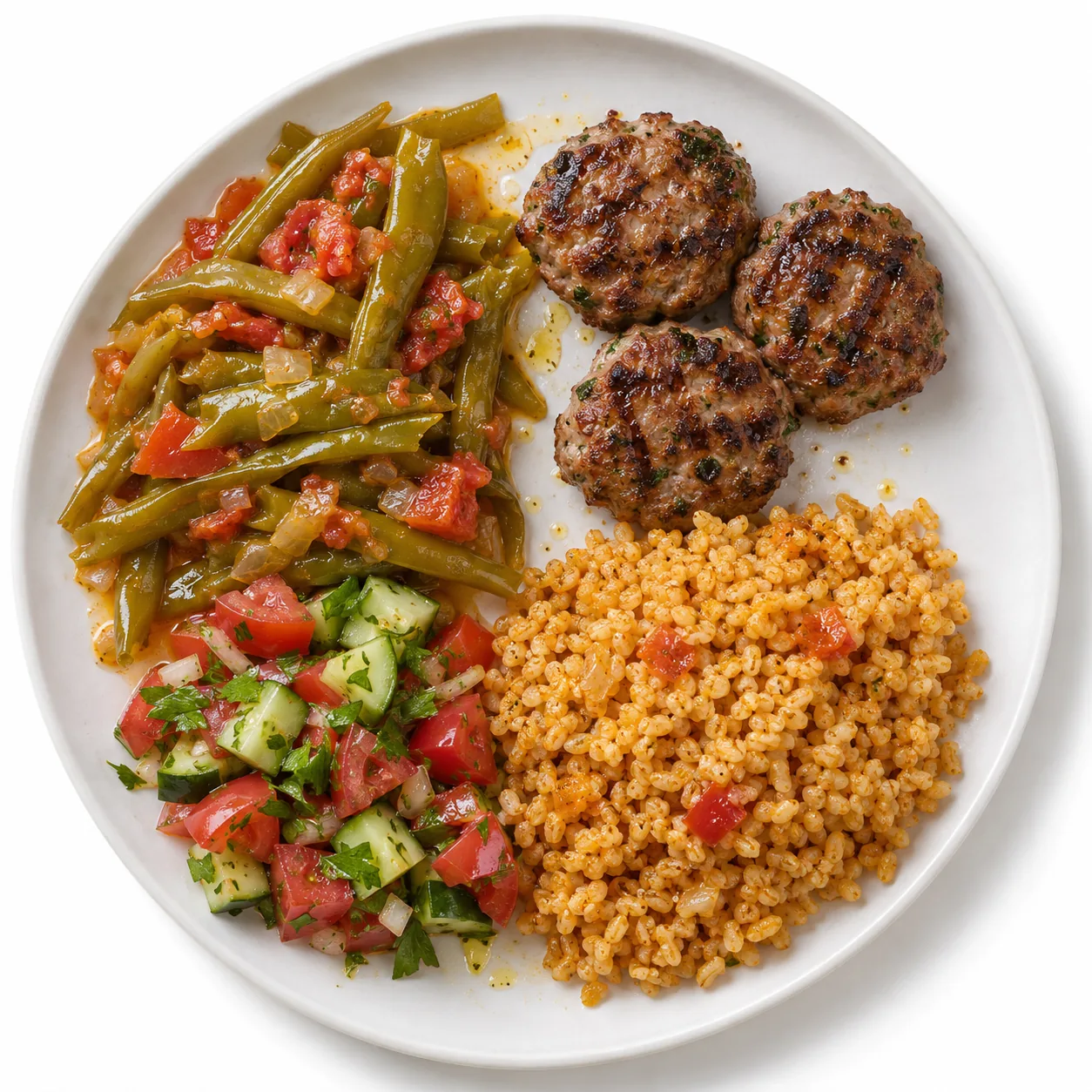
Pick a meal, drag ingredients onto the plate or tap +. The plate proportions, approximate energy and protein change as you add. Not an exam; just an easy way to look at your plate from the outside.
Drag a card onto the plate or tap +. Tap an ingredient on the plate to remove it.
-
 Green beans in olive oil1 portion (150 g) · 90 kcalVegetables
-
 Shepherd salad1 bowl (200 g) · 70 kcalVegetables
-
 Red lentil soup1 bowl (250 ml) · 150 kcalOn the side
-
 Grilled chicken breast1 palm (100 g) · 165 kcalProtein
-
 Boiled eggs2 eggs · 155 kcalProtein
-
 White cheese1 matchbox (40 g) · 110 kcalProtein
-
 Chickpea stew1 bowl (200 g) · 190 kcalProtein
-
 Bulgur pilaf1 fist (150 g) · 180 kcalGrains
-
 Whole-wheat bread2 thin slices (60 g) · 140 kcalGrains
-
 Yoghurt1 bowl (200 g) · 120 kcalOn the side
-
 Apple and mandarin1 portion · 95 kcalOn the side
-
 Walnuts and almonds1 handful (25 g) · 160 kcalOn the side
 VegetablesProteinGrains
Your plate proportions
- Vegetables0%target 50%
- Protein0%target 25%
- Grains0%target 25%
Approx. energy0 kcal
Protein0 g
Carbohydrate 0 g · Fat 0 g · Fibre 0 gThe plate is empty for now. Try starting with vegetables: half the plate.
Values are approximate per portion and for information only; your own needs depend on age, activity and health. Calculated in your browser; nothing is sent.
From the first call to the first check-in
Each step builds on the previous one; from the first call to the first check-in, you know what happens and when.
Free 15-minute intro call
A short phone or video call. I listen to what you want, explain how I work, and we both decide whether it is a good fit.
First consultation: history, measurements, habits
About 60 minutes. Your health history, lab results if you have any, height, weight and body composition, a week of your eating pattern and your daily hours.
Plate plan and shopping list
Your own meal pattern, swap list, a sample weekly menu and a shopping list. Separate notes for eating out, business lunches and festive tables.
Check-ins and fine tuning
A 30-minute check-in every two weeks: measurements, what was hard in the plan and the next small change. Short questions by message in between.

Hello, I am Selin Yılmaz.
For twelve years I have been talking plates with people. Rather than handing out a diet sheet, I like solving the hardest meal of your week together.
I see clients in person at my office in Nilüfer and online from anywhere. I write the plan into your shopping list and your kitchen routine, not onto a sheet of paper.
- 2008–2012BSc Nutrition and DieteticsHacettepe University, Faculty of Health Sciences
- 2014–2017MSc Nutritional SciencesBursa Uludağ University, Institute of Health Sciences
From the kitchen
The recipes I recommend most in plans: all from Turkish cuisine, all fit into a weekday evening.
 Pulses and grains
Red lentil patties (mercimek köftesi)
40 min · 210 kcal
 Main dish
Borlotti beans in olive oil
70 min · 260 kcal
 Pulses and grains
Bulgur pilaf with chickpeas
35 min · 330 kcal
 Main dish
Baked sea bass with vegetables
40 min · 380 kcal
 Breakfast
Overnight oats with apple and cinnamon
10 min · 340 kcal
All recipes
Frequently asked
What is the difference between a dietitian and a specialist dietitian?
Can you tell me how many kilos I will lose?
My doctor started medication; do I still need a nutrition plan?
Is intermittent fasting suitable for everyone?
What happens in the first session?
Do I need to prepare anything before the session?
15 minutes,
free, no commitment.
In the intro call I listen to what you expect and we choose the right type of consultation together. Whether to continue afterwards is entirely your decision.